9 fotos
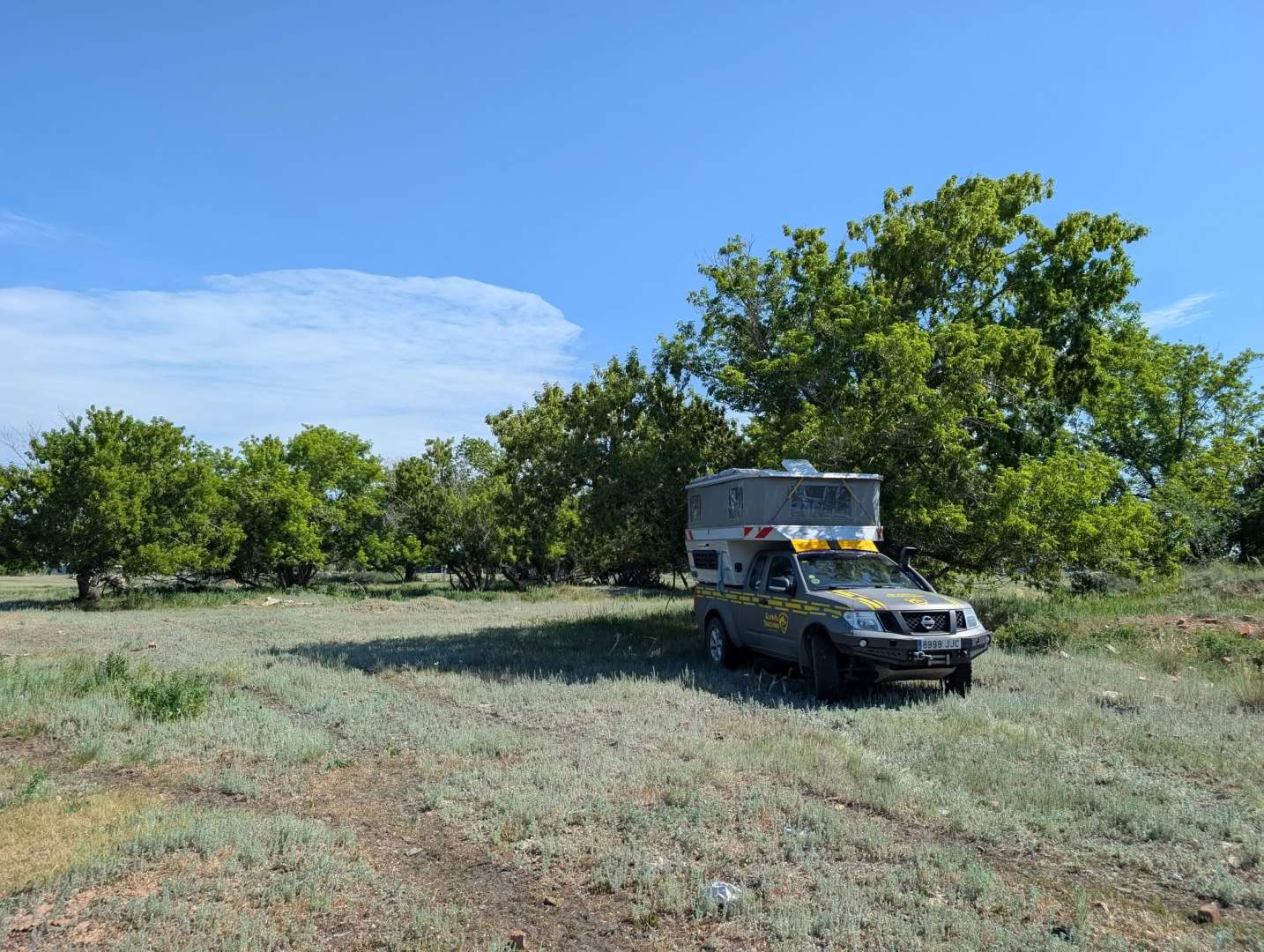



We woke up with the sun beating down with the force of a flamethrower, so Daddy Edu had to perform the now-traditional manoeuvre of moving the camper a few metres to scrape together some shade. We had a leisurely breakfast, but just as we were finishing packing up our gear, a white pick-up truck appeared with four soldiers on board. With the help of the blessed Google Translate, they explained to us, in a very kind but firm manner, that we could not be there due to our extreme proximity to the Russian border. Upon learning that our destination was precisely to cross into the neighbouring country, they offered to escort us. Daddy Edu asked for a fifteen-minute truce to lower the camper's roof and secure everything loose inside so it wouldn't go flying when the car started, and he gave them notice that we needed to stop at a petrol station. We kept to the military deadline and sped off, following their truck. After the stop to refuel, the soldiers must have become lackadaisical, because they said their goodbyes in a friendly manner, though not before wagging a finger at us to warn us that we could not stop the car under any circumstances for the fifteen kilometres that separated us from customs.
Leaving Kazakhstan was a walk in the park that took barely fifteen minutes, but entering the territory of the Tsars was another kettle of fish. We spent more than three hours in a tedious queue under the sun before gaining access to the Russian checkpoint. Once there, we had to endure the classic song and dance: throwing open every door of the car, the bonnet, and every nook and cranny of the camper. But the worst came later, when they confiscated the passports and separated my humans to subject them to the dreaded control interrogation—a face-to-face with a camera and microphone on the table that made my hair stand on end from the car. Tito Joan got stuck with the worst version of a translator, who insisted on translating from Russian into English, a language in which Joan doesn't exactly excel. Daddy Edu was hit with a barrage of questions straight to the chin about his life, his former career as an engineer, and his opinion on the conflict with Ukraine. Thankfully, Edu was quick on his feet and, to avoid suspicion regarding his actual past in the defence sector, mentioned his idyllic career in train and railway maintenance in the Netherlands, settling the political topic with an impeccable and neutral "politics doesn't interest me."
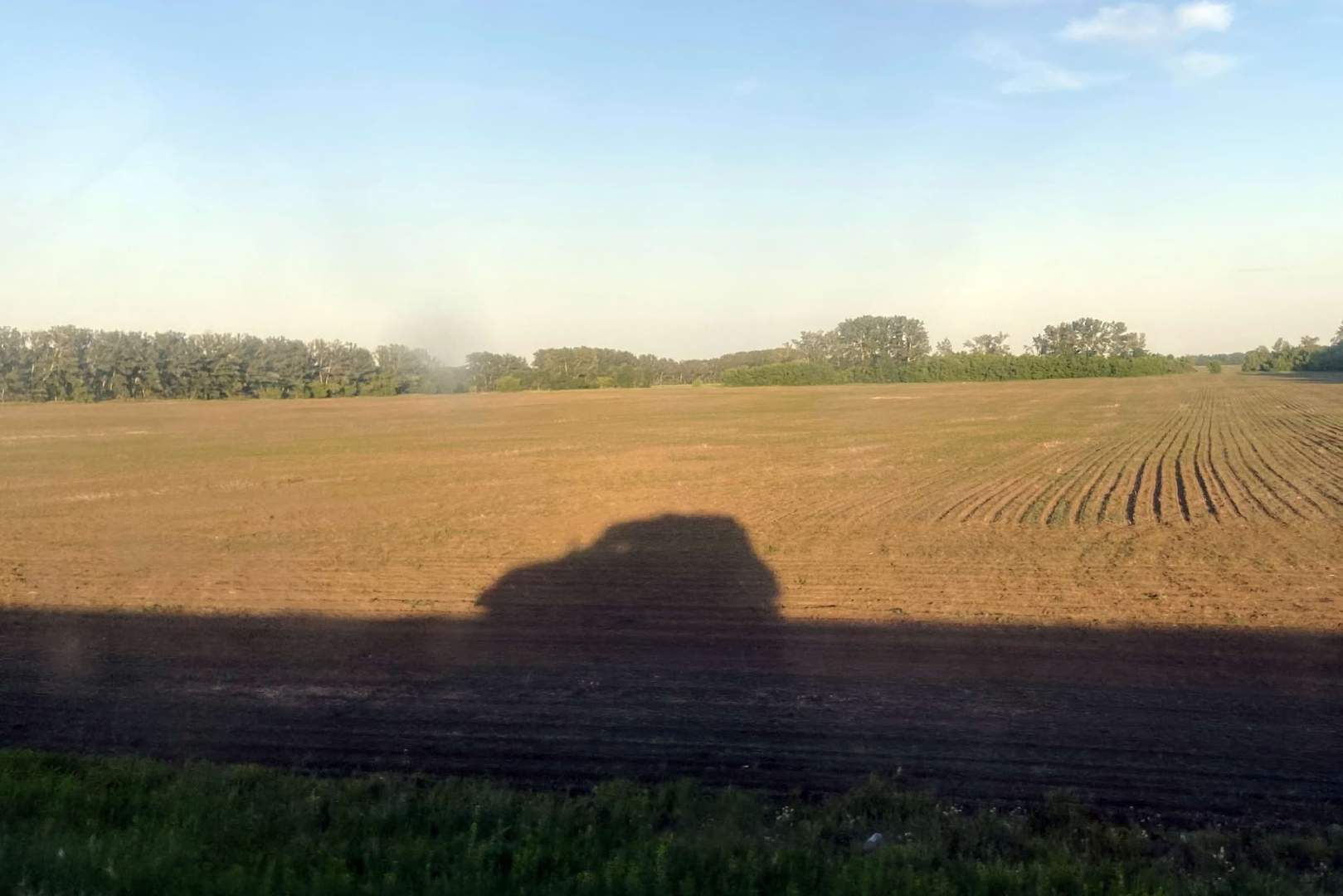
After an hour of tension and stern faces, they returned our documents and stamped us in. Once on Russian soil, the absolute priority was to get the mandatory insurance for the car; we had to bounce between three different offices until we were finally able to process it in the village of Veseloyarsky, ten kilometres from the border. With the paperwork in our pocket, it was time to look for a spot to park the camper for the night. The task proved desperate because all we had around us were endless crop fields. The few small groves of trees we found were right next to irrigation canals infested with trillions of hungry mosquitoes, and the other spaces were too exposed to the road. Having no other choice, we devoured one hundred and thirty kilometres along Russian roads that, it must be said, are in an impeccable state, until we decided to throw in the towel and pull into a truck stop on the route. It’s not the most idyllic place in the world, but we have tucked ourselves into the edge of the tarmac, almost stroking a potato field. It’s a safe and quite quiet spot, if we ignore the fact that one of the four neighbouring truckers has decided to leave his engine running the whole time to lull us to sleep with its diesel purr.
Añadir nuevo comentario