74 fotos








We woke up again today to rain, that fine but persistent kind that doesn't soak you much, but wears down your morale. Even so, the sky looked like it would improve, so at eleven we set off and headed for Plasencia with the hope of a rematch. And lo and behold, today it did. Just as I got out of the camper and put my first paw in the city, the rain decided to discreetly retreat. Thanks, universe, it was about time.
Before getting down to business we stopped for a moment next to the Plasencia aqueduct, for the obligatory photo. It's a 16th-century work, known as the San Antón aqueduct, which carried water from the mountains to the city. It's not huge or spectacular, but it has that sober charm of well-made things that have lasted for centuries without asking for applause. Photo, ears to the wind and we continue.
We parked in the same free car park as yesterday, near the old town, and set out to explore on foot and on paw. We entered through the Puerta de Berrozana, one of the old gates of the medieval wall, and from there everything began to have that air of a historic city that the bad weather had robbed us of yesterday. Stone streets, walls, towers and that relative silence that is only broken by footsteps and conversations.
We arrived at the Plaza Mayor, which is spacious, bright and very pleasant. The Town Hall takes all the glances, with its Renaissance façade and that solemn air that asks for a photo yes or yes. I posed with canine dignity while Edu did his thing with the camera. From there we went into the Calle de los Toros, the shopping street, which was overflowing with people. You could tell that the Three Kings were approaching and that humans enter that nervous state of compulsive buying that I don't quite understand.
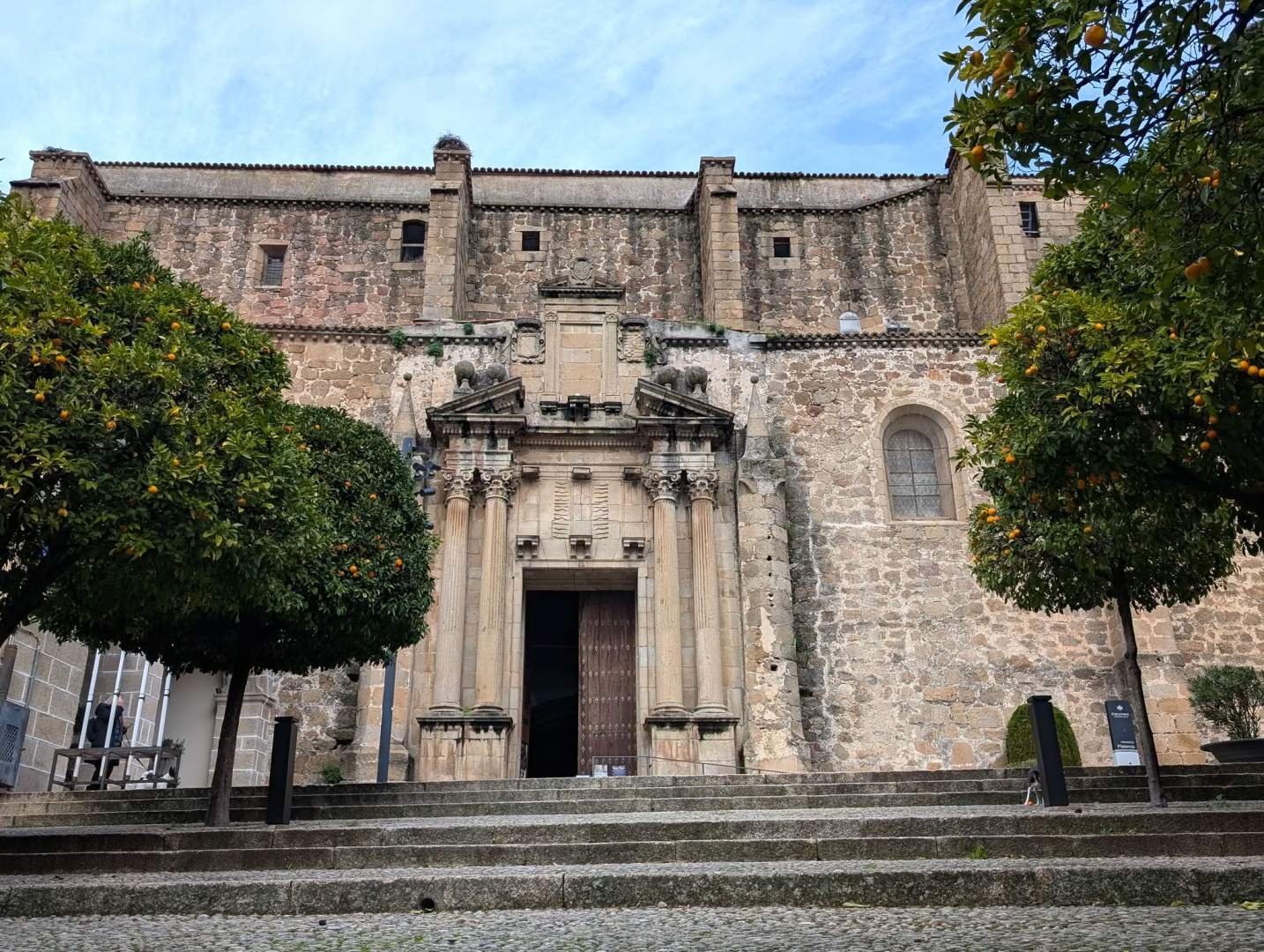
We continued towards the cathedrals, because in Plasencia they didn't settle for one. There is the Old Cathedral, Romanesque and Gothic, more sober and collected, and the New Cathedral, Renaissance, huge and ambitious, which was built without ever finishing completely. The two are stuck together, as if they got along well despite the centuries. We didn't go in because it's paid and I couldn't go in, and leaving me outside while Edu soaked up history didn't seem like a good plan. So we enjoyed them from the outside, which isn't bad either.
We saw nativity scenes in several churches, and ended up in the main nativity scene in the city. You know that we are not very keen on Christmas or figurines, but I recognise that this one was very well done, an Arabian city in miniature full of details, streets, lights and scenes.
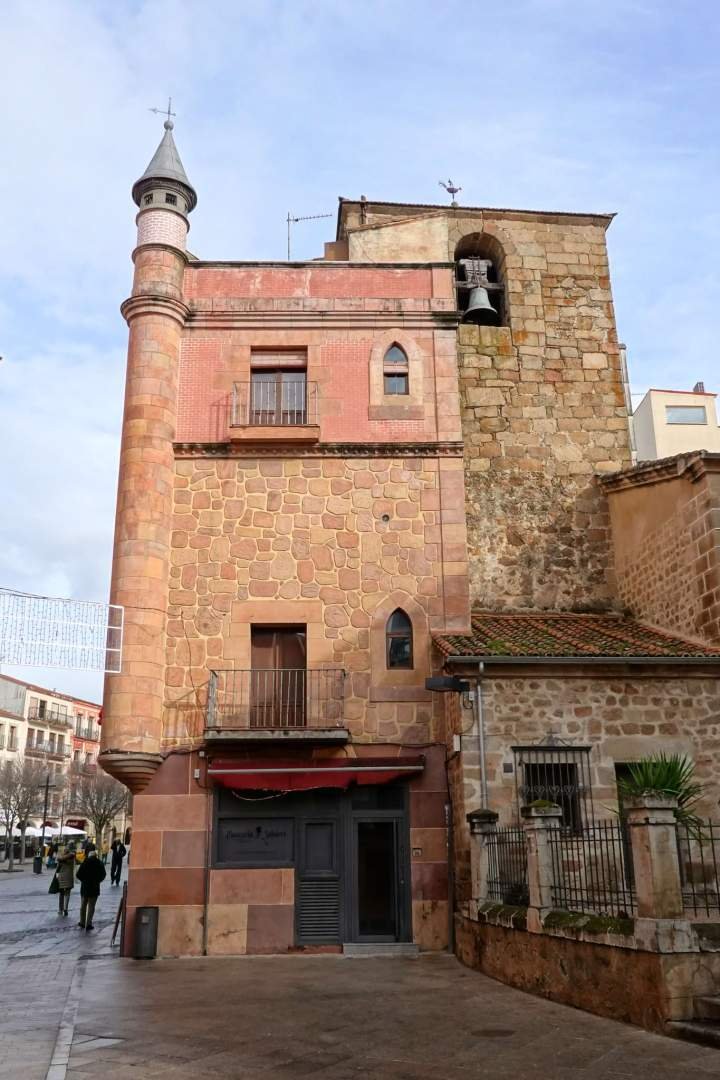
We continued towards the Puerta de Trujillo, which is very curious because above the door it has a chapel dedicated to the Virgin. It reminded me a lot of the Gate of Dawn in Vilnius, saving the distances and the barks. From there we passed by the Palacio del Marqués de Mirabel, a noble and elegant building, and the Convento de Santo Domingo, right next to the Parador de Plasencia, which occupies an old convent and has an impressive air even seen from the outside.
We went into Calle Arenillas, narrow and peculiar, and then we wandered aimlessly, which is how cities are best known. Before going back to the car we passed through the Puerta del Sol and another stretch of wall, thus closing the Plasencia circle.
Already in logistics mode, it was time for diesel. We found a cooperative where it wasn't overpriced, but it was more reasonable than what we had seen so far. Between the tank and the jerrycans we loaded a hundred litres. I looked with respect at that human refuelling ritual, because when Edu says we're running tight, it's usually true.
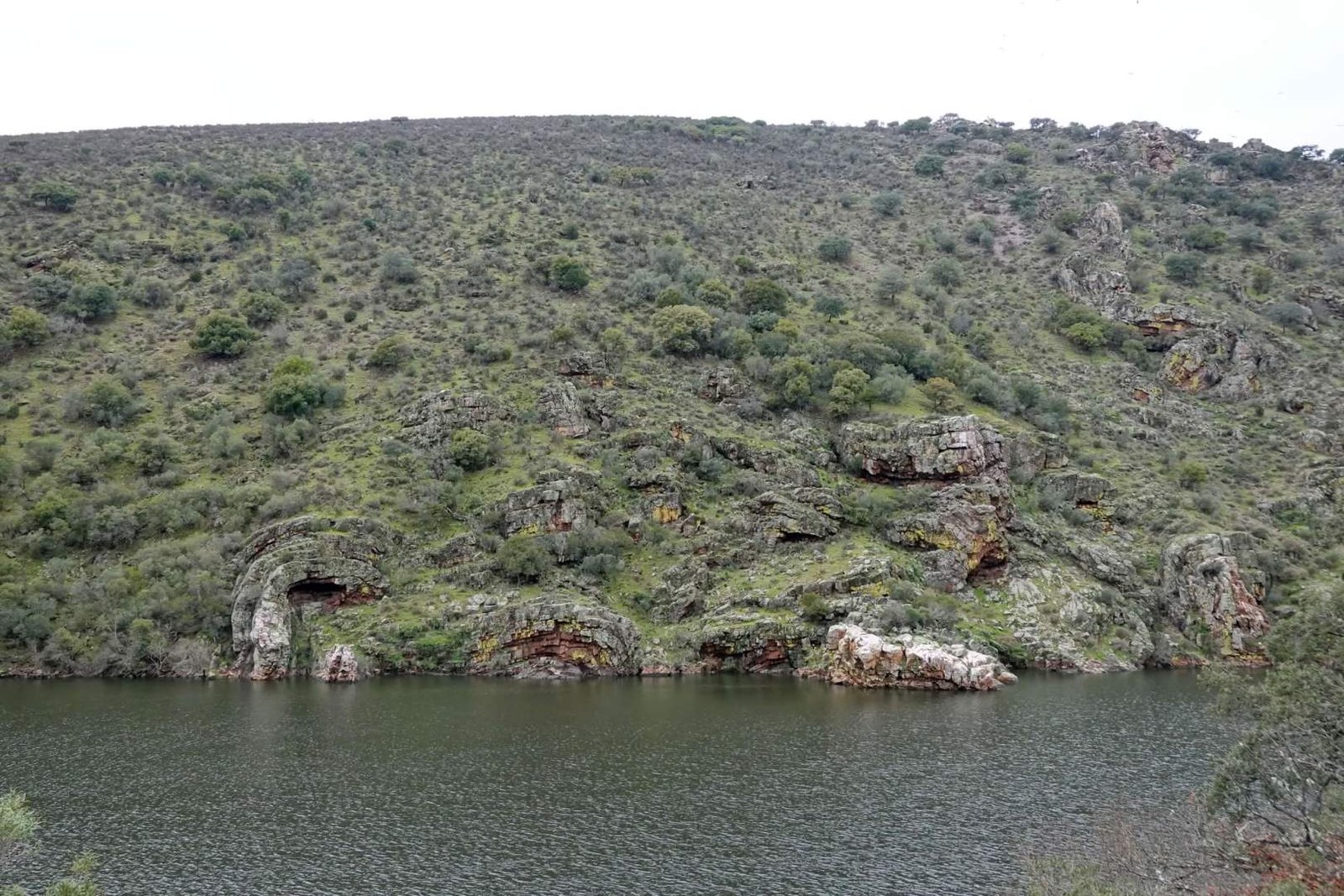
We had a quick lunch in a rest area and headed for the Monfragüe National Park, one of the great nature sanctuaries on the peninsula. It is famous for its dehesas, its embedded rivers and, above all, for the birds of prey. And we certainly proved it. At the Mirador de la Portilla del Tiétar we were nailed. On the other side of the river, on the rocks, there were dozens of birds. Griffon vultures, black vultures, Egyptian vultures... some flying, others perched, others arriving with food. It looked like rush hour in a Michelin-starred restaurant for birds of prey. I didn't know where to look first.
We continued through the park stopping at other viewpoints, including the Malavuelta, with views of the José María de Oriol, Alcántara II reservoir, a huge and very powerful landscape. But as this is a National Park, you don't sleep here, and we had to leave, yes or yes.
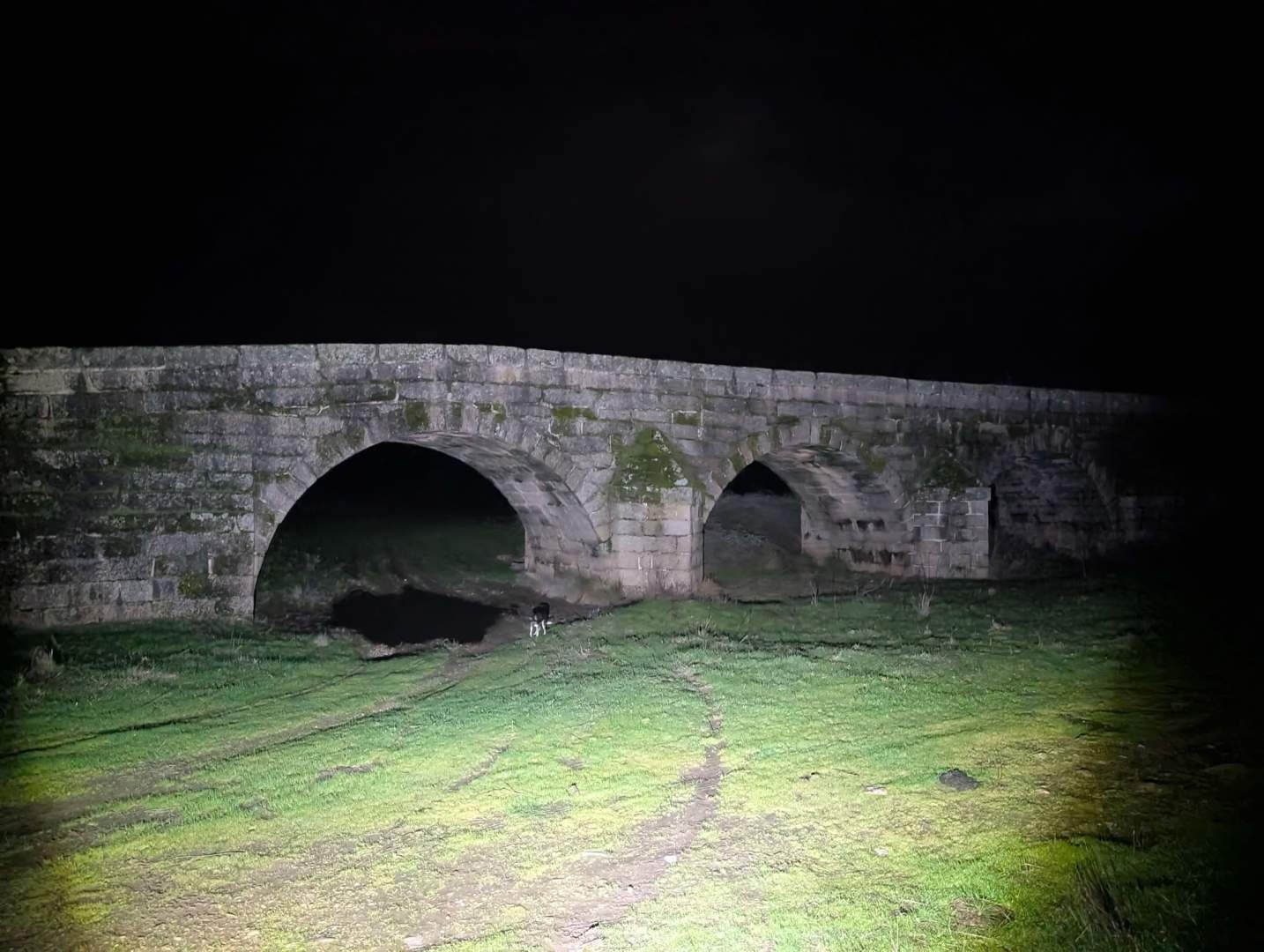
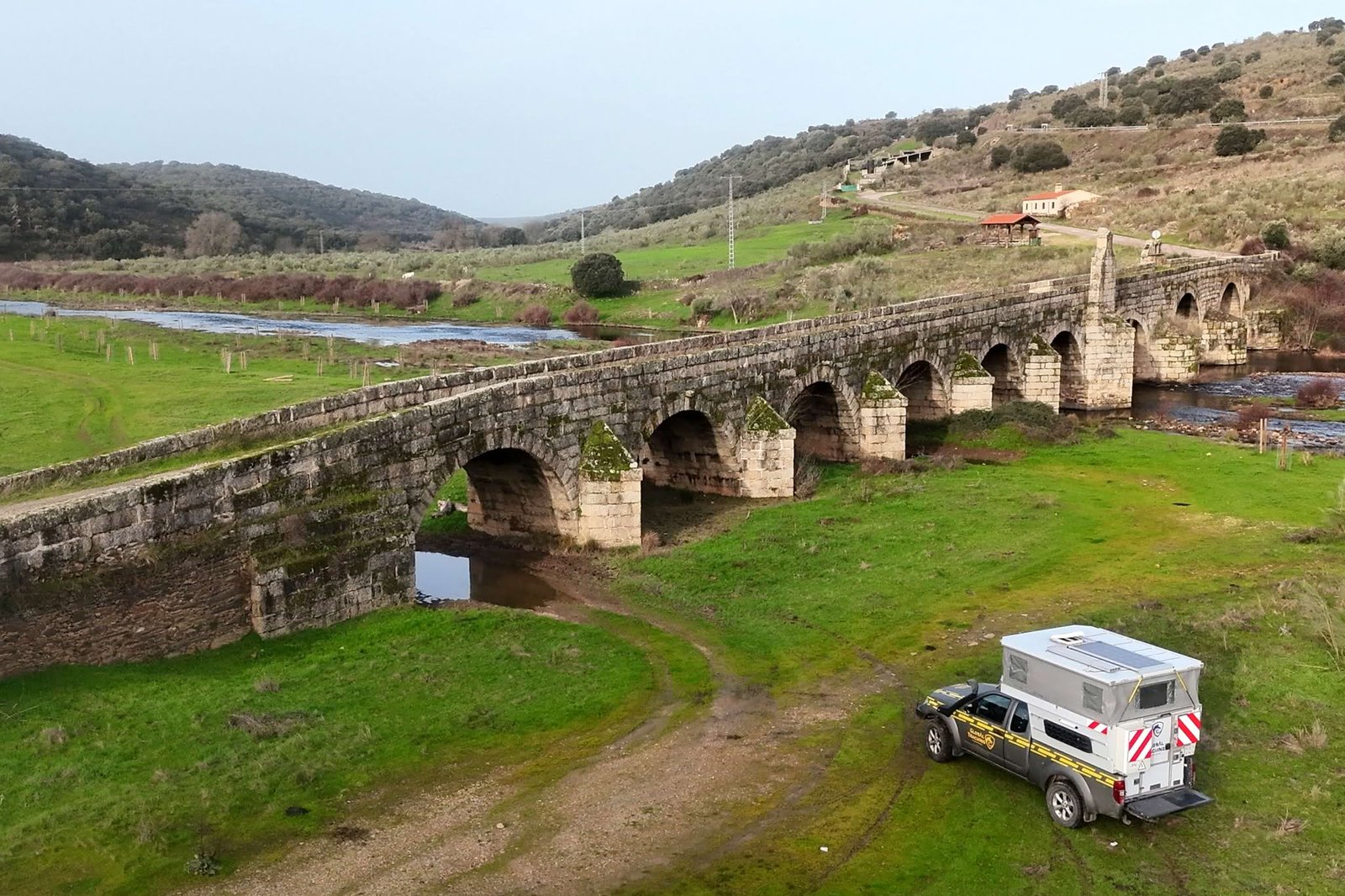
The detour was long, because the river commands, and after about forty-five kilometres we ended up, already at night, near a town with a curious name, Jaraicejo. There we found a perfect spot next to the 17th-century bridge, a late Romanesque style bridge that was part of an old historical road. Made of stone, elegant, silent and with that air of a place that has seen a lot of life pass.
We are alone, calm, with the bridge as a night-time backdrop and the feeling of having made the most of the day. I've already done a couple of inspection rounds. Everything in order, so here we stay to sleep.
Añadir nuevo comentario