46 fotos






After a strange night, one of those where nobody really knows why they haven't slept even though everything is calm, we woke up very late. It was raining desultorily outside, a fine rain that doesn't bother but doesn't encourage either. So we did what we do best. Take it easy. Slow breakfast, glances at the sky, me checking that everything was still in its place and Papi Edu accepting that it wasn't going to be a morning person day. Well after midday we set off and headed for Guadalupe. About three-quarters of an hour by car, quiet roads and that mental hum of "I wonder how it will be".
We parked in a huge and almost empty car park near the old town. As soon as we got out of the car it stopped raining, which always seems to me like an elegant touch on the part of the weather. Guadalupe is one of those villages that clings to the mountain. Cramped houses, streets that go up and down without asking permission and a very long history for such a small place. For centuries it was one of the most important pilgrimage centres on the peninsula and that shows in every stone, although now everything goes at a much slower pace.
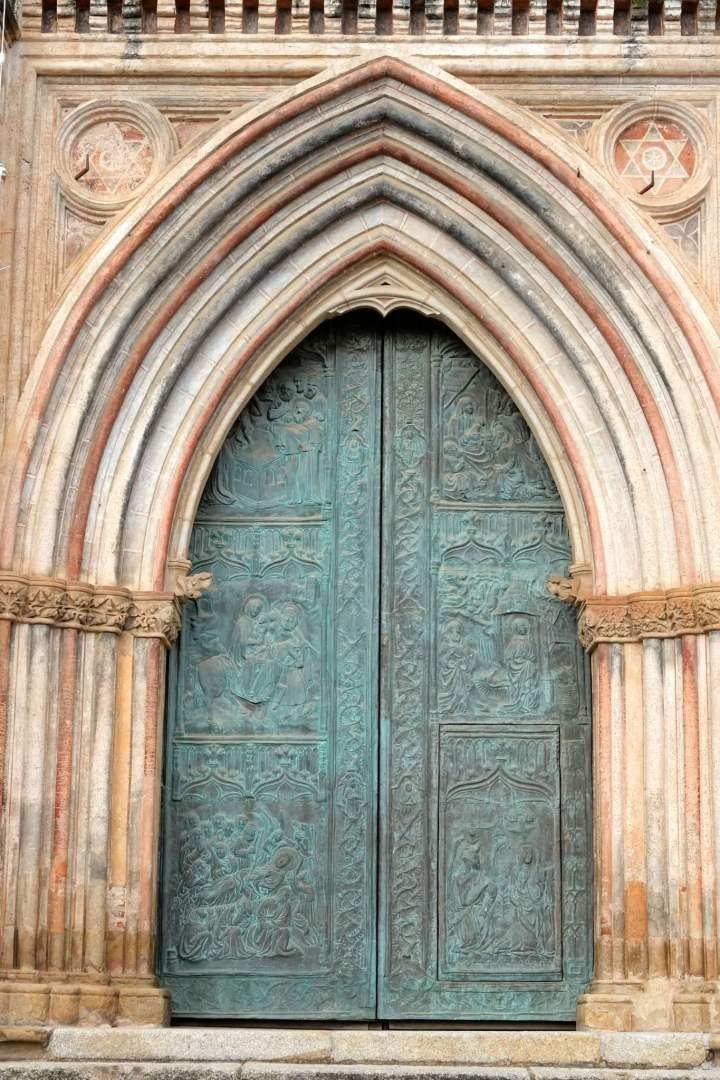
We went up on foot, crossing several ancient gates, wandering without a fixed plan. What caught our attention the most were the houses with huge balconies that overlook the street so much that you can almost greet each other from balcony to balcony without stretching too much. Everything has a very well-preserved medieval air, without seeming decorated. We arrived at the Plaza de Santa María de Guadalupe, which is the heart of the village, and there the basilica is imposing. Big, serious and with that aspect of a building that has seen many things.
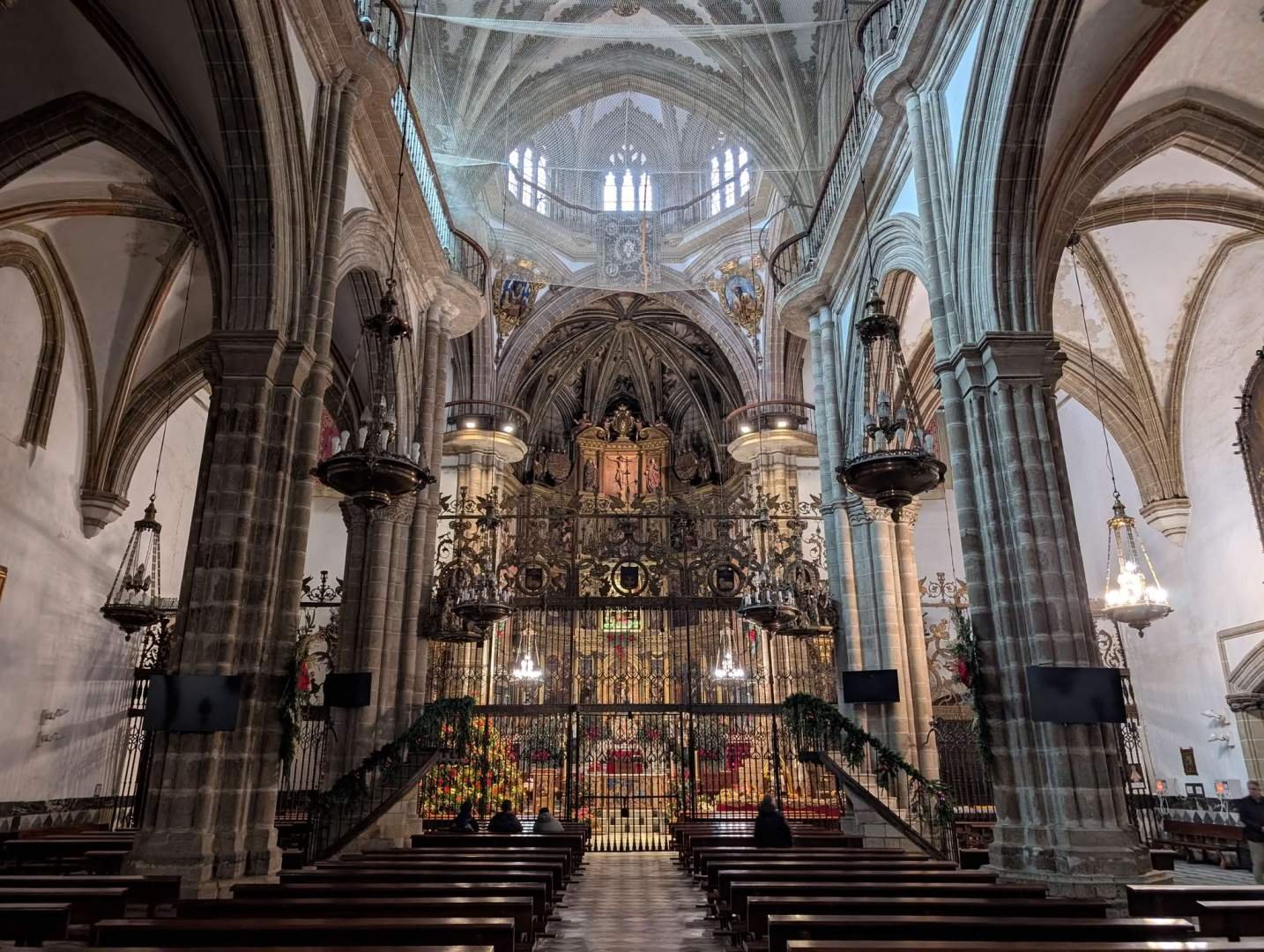
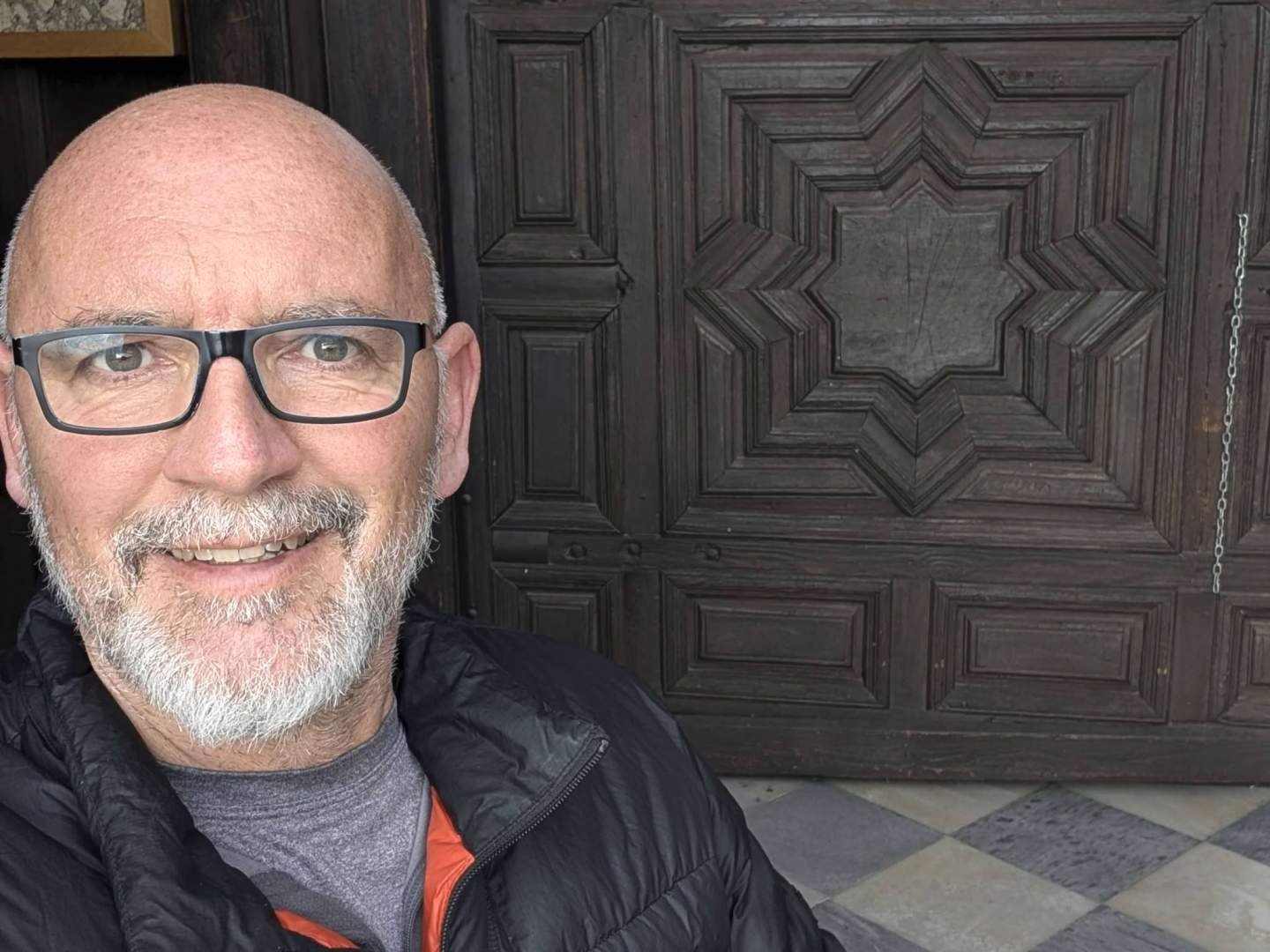
Papi Edu went in for a moment to see the basilica from the inside. I stayed outside on professional guard duty. Inside it is solemn, with a wide nave and a lot of accumulated history. It is not overly ornate, but very forceful. When we left, we continued wandering around for a while longer, going up and down slopes, looking at shop windows, old doorways and quiet corners. In just over an hour we were back in the car.
We ate right there, something quick, because in the afternoon we had an important visit. I stayed in the camper, as someone has to watch over everything, and Papi Edu went to see the Monastery of Guadalupe. Dogs are not allowed in, so I had to imagine everything later with the summary.
The monastery is a World Heritage Site and it's no wonder. The visit is not guided in the usual way, but rather precisely organised. A caretaker opens and closes doors and the group, about thirty people, moves forward as if following a very serious choreography. Several rooms around the cloister are visited and photos can only be taken in the cloister. It is Mudejar style, with brick, ceramics and a special calm that is noticeable even in the photos that Edu later showed me.
First you go through the Embroidery Museum, with liturgical pieces of incredible richness. Then the Museum of Illuminated Books, where there are ancient manuscripts that look like they were made with a magnifying glass and infinite patience. Then the Museum of Fine Arts, with paintings by important artists that you don't expect to find in such a small village.
The visit continues through the sacristy, which is spectacular and is considered one of the most beautiful in Spain, full of paintings, carved wood and details everywhere. Then you enter the reliquary-treasure, the Chapel of San José, where religious objects of enormous historical value are kept. And in the end you go up to the chamber of Our Lady, after climbing a couple of stairs.
There is the Virgin of Guadalupe. She is small, barely fifty-nine centimetres, and she is black. And not by chance or by the passage of time. The monk explained that she is black on purpose, inspired by a verse from the Song of Songs of the Bible, where it says "Nigra sum sed formosa", I am black and beautiful. This text was interpreted for centuries as a symbolic reference to the Virgin. That is why her colour was not hidden or corrected, on the contrary, it became an essential part of her identity. It is a very old Romanesque image and has been of enormous importance in the history of Spain. Kings, navigators and conquerors venerated her, and her name crossed the ocean to give its name to the Mexican Guadalupe. She is not big, she is not ostentatious, but she is imposing in a very silent way.
At around half past five Papi Edu came back to the car and told me everything with enthusiasm, while I nodded with a face of "I already knew it". We set off and Google decided that the best thing was to take us through the centre of the village. We passed under balconies and through doors so narrow that I was shrinking my ears just in case, but we came out without a scratch.
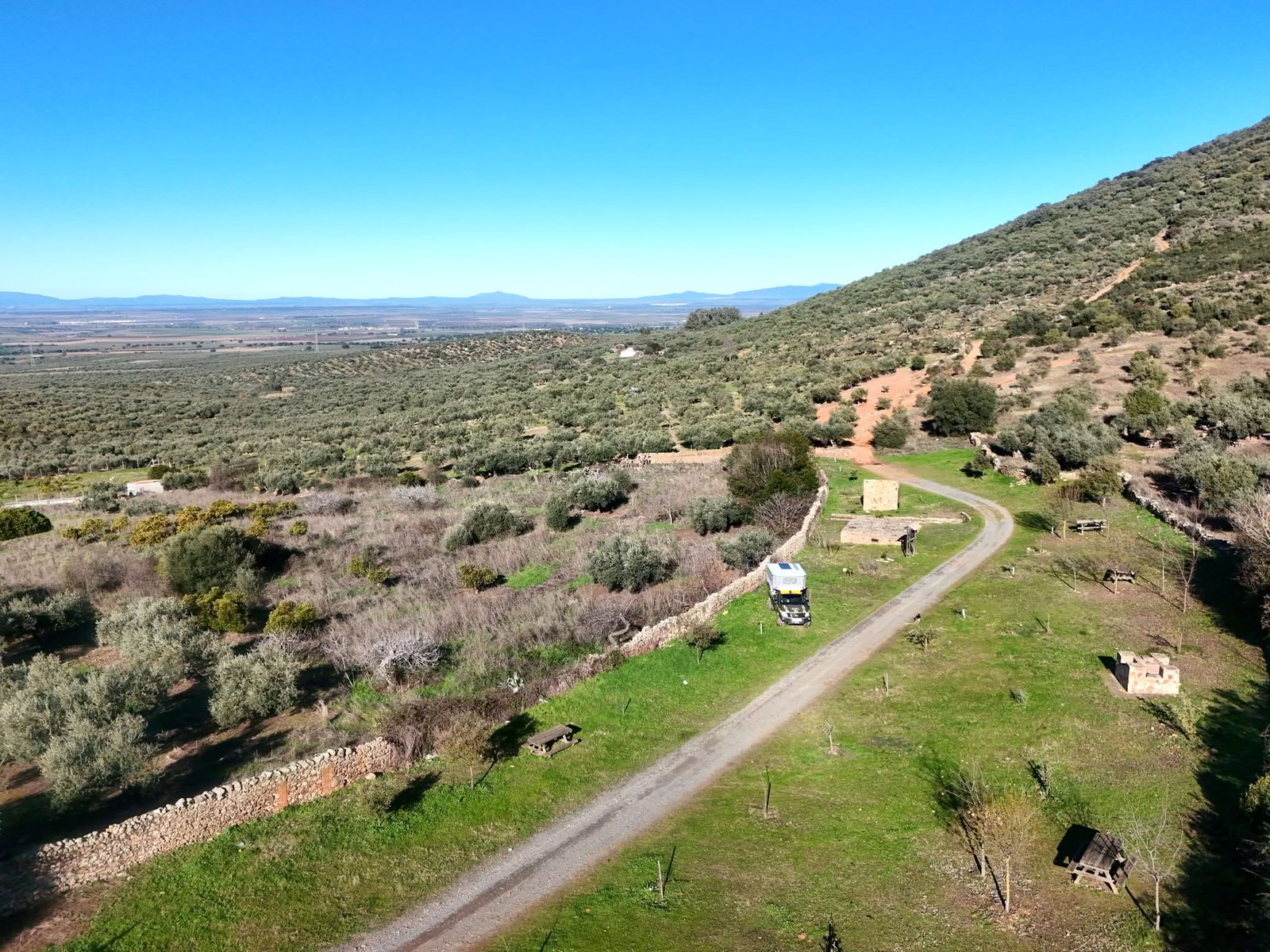
We headed south and after more than an hour by car we arrived at the place where we are going to sleep. To get there, Google took us along quite questionable country roads, although there are surely better accesses. The place is not on Park4night. Papi Edu found it on Google Maps. It's a picnic area and we arrived almost at night. You can't see everything very well, but it seems beautiful, quiet and with views. Enough to know that nobody is going to bother us here.
We closed the day in silence, with the camper still and the world outside slowly fading away. Today has been a day of stone, history and slow steps. One of those that stay inside you even if it's hard to sleep.
Añadir nuevo comentario